
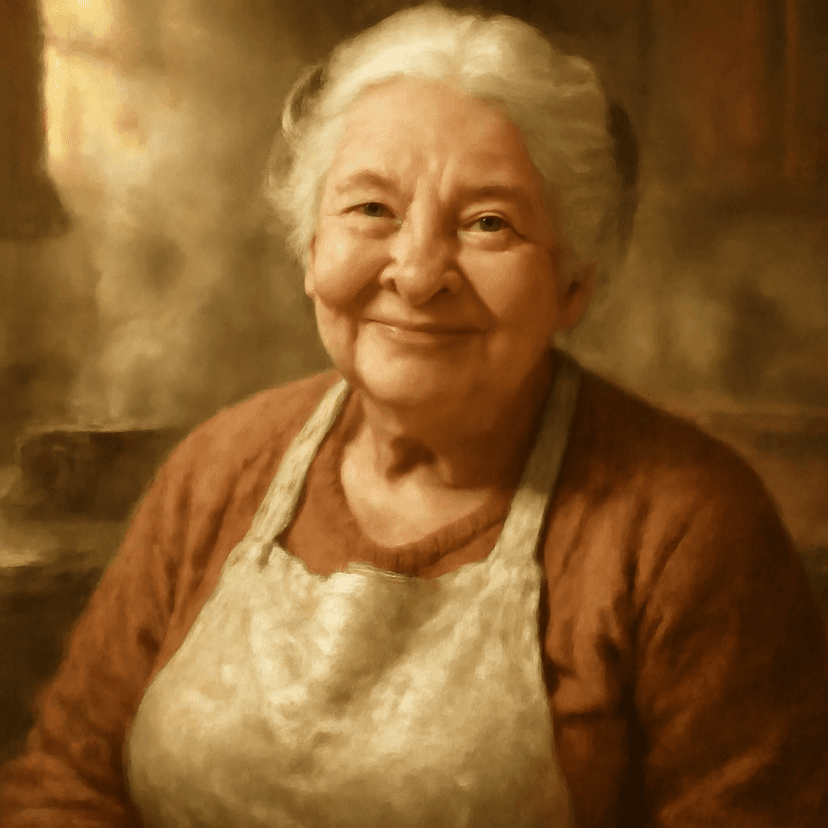
Grandma (Otto's wife)
Maria holds the family together — literally, because when she makes her soup, everyone shows up at the table, even those who are fighting. She solves every problem with food and a hug, in that order. She sings old songs while she knits, keeps a box of old photographs she doesn't show anyone except on special occasions, and smells of lavender and fresh bread. She's stubborn, but only out of love — when she says 'eat', she's not asking.

Eva and Dundo had a rare day off without the kids. Otto and Maria eagerly stepped in to babysit the little ones while the couple decided to revisit the place where they first met. As they approached the old wooden bridge over the stream, Eva reminisced about that evening, and Dundo had a special gift hidden in his pocket.
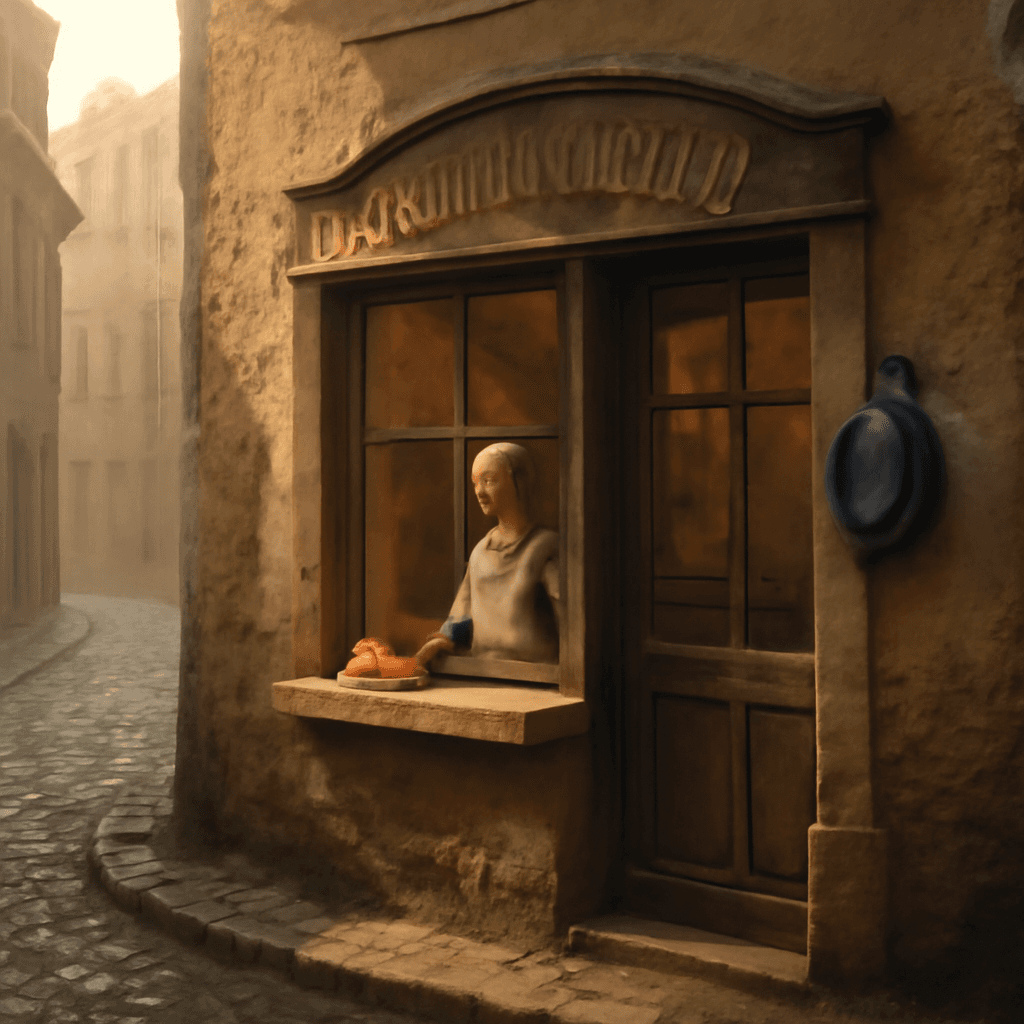
In the narrowest street of the old town stood a bakery that never had more than one customer a day. Every morning, an elderly woman named Maria would knead the dough, braid a perfectly shaped bun, and place it in the window where the cat Loli often slept. Then she would sit and wait. The customer was always the same—an old man with a blue hat who would arrive exactly at 7:15, leave a coin, take the bun, and leave without a word. People thought Maria was crazy. 'Why doesn't she bake more? Why doesn't she sell to others? Her buns are the best in town!' But Maria would just wave her hand and say, 'I don't bake for everyone. I bake for the one who needs it.' One morning, the old man with the blue hat didn't come. 7:15. 7:30. 8:00. The bun sat on the window, cooling. For the first time in thirty years, Maria began to cry in her bakery. Then there was a knock at the door from someone she had never seen before...
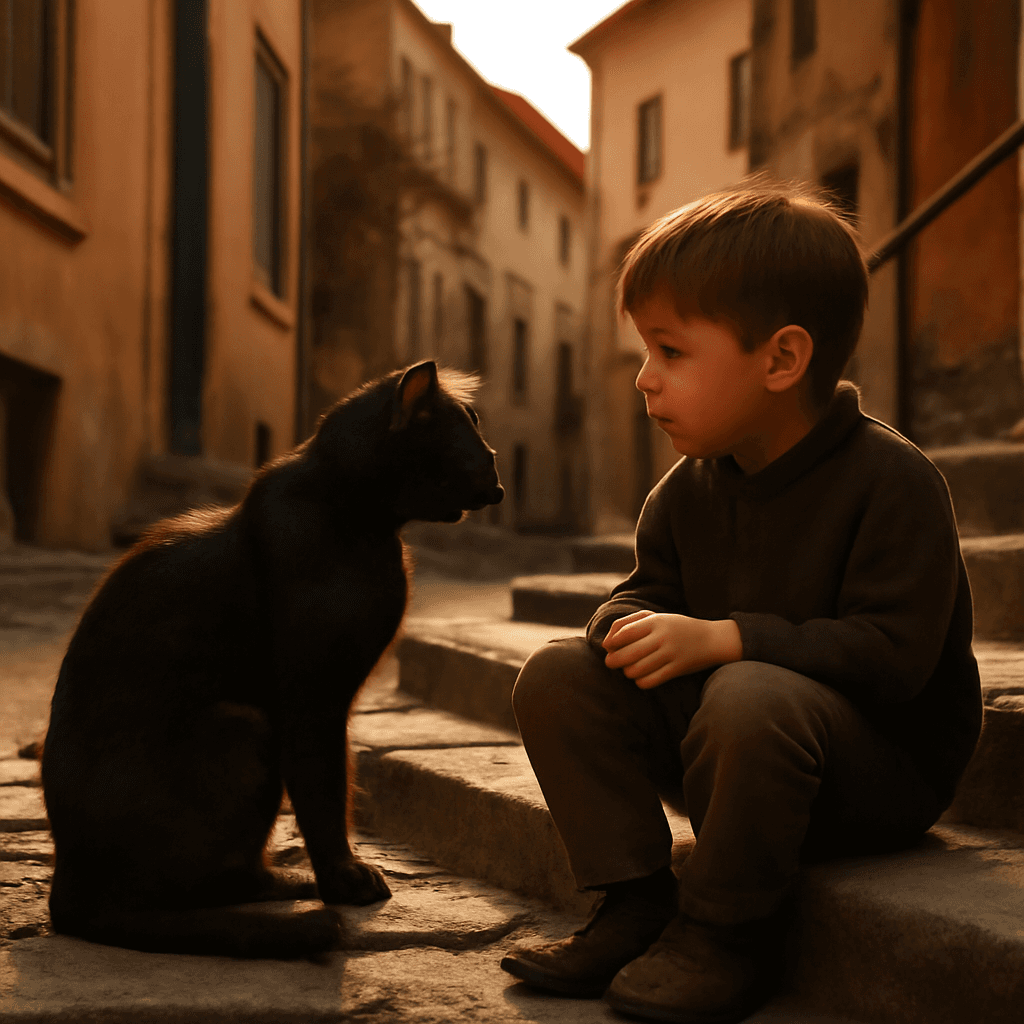
In the neighborhood by the river, there lived a dog that everyone called Jole. He was brown, with one white ear, and as far as anyone could remember, he had always been there. The old women claimed they remembered him from their childhood. "Impossible," the young ones said. "Dogs don't live that long." But Jole was different. He had a scar on his paw, limped on his hind leg, one eye was closed, and he had a knot on his tail. Each injury had its own story. Little Filip, who had just moved to the neighborhood and had no friends, sat every day on the steps in front of the building, watching Jole pass by. One day, the dog sat next to him and — Vito could swear — looked at him with that one eye as if he understood him. "Everyone says you've lived nine times," Filip whispered. "Is that true?" The dog barked. Old Mrs. Maria, who lived on the ground floor and had heard everything, opened her window and said, "Jole hasn't lived nine lives, boy. But nine times he almost died. And each time, he learned something people don't know..." From the window, Loli watched the scene with her green eyes, as if she knew the secret herself.
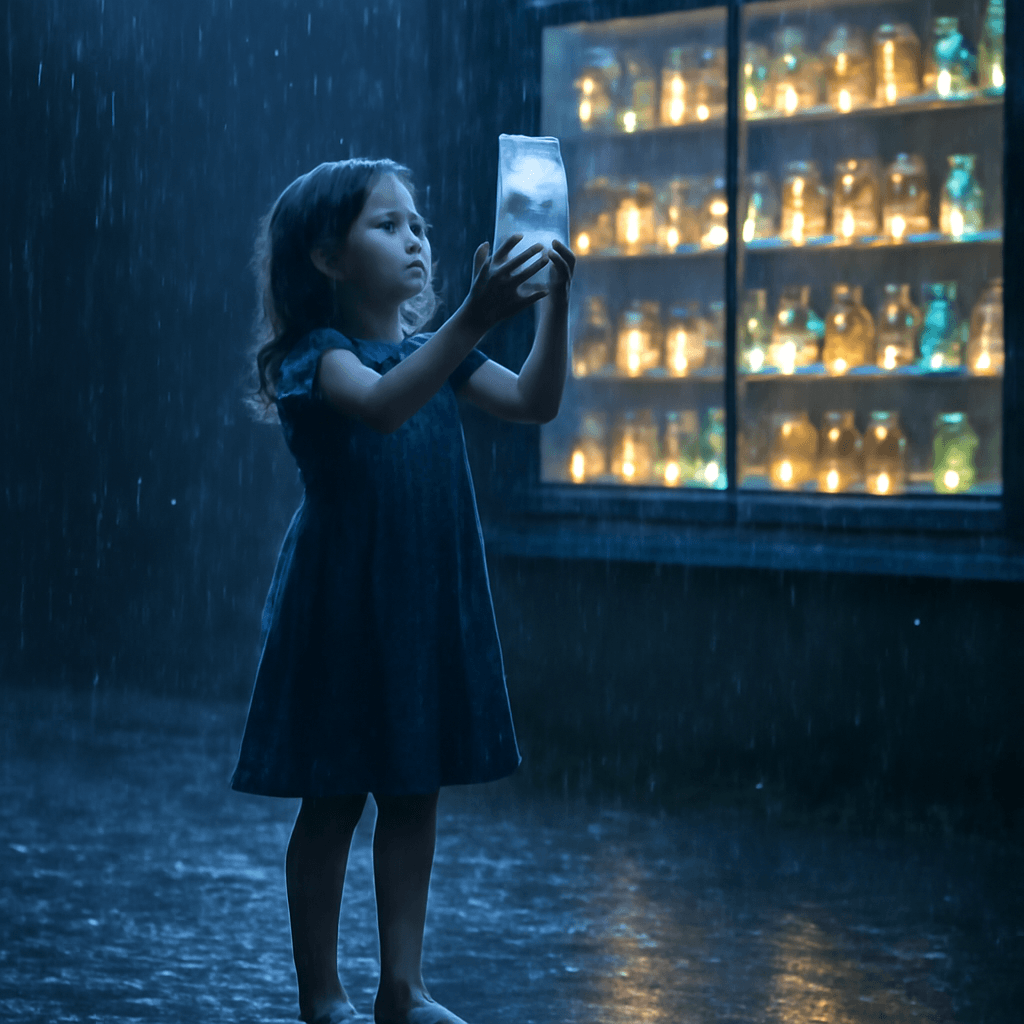
Hana had a peculiar habit. Every time it rained, she would rush into the yard with an empty glass jar and collect rainwater. On the shelves of her room stood more than a hundred jars, each marked with a date and a small label. "Hana, why do you collect rain?" her classmates asked at school, giggling. "It's just water!" But Hana knew something the others did not. Her grandmother Maria, who lived on a village island, had taught her this before she passed away. She had shared with Hana just one sentence — a sentence Hana never repeated to anyone. One day, the worst drought in fifty years struck the town. Parks turned yellow, fountains ran dry, and people waited in long lines for water. That evening, Hana sat on the floor of her room, surrounded by jars, and for the first time opened the oldest one — the jar she had filled with her grandmother on the last day they spent together. When she opened the lid, she caught a scent that stopped her in her tracks...

Maja was a girl who was afraid of the dark. Every night, when her mom turned off the light, Maja would dive under the blanket and wait for morning. But there was a peculiar old lady living on her street — Aunt Margareta — who had the most beautiful garden in the whole town. The problem was Aunt Margareta never worked in her garden during the day. Never. Neighbors whispered about it. "We saw her digging at midnight." "Planting flowers at three in the morning." "Watering roses under the stars." Everyone thought she was strange. One night, when Maja woke up at three a.m. and couldn’t sleep from fear, she looked out the window. She saw Aunt Margareta kneeling in her garden, hands in the soil, and — singing. The next morning, Maja knocked on her door. "Mrs. Rose, why do you work in the garden only at night?" The old lady looked at her with warm eyes and said, "Because at night, plants do something miraculous that people don't know. And when I show you, you'll never be afraid of the dark again."
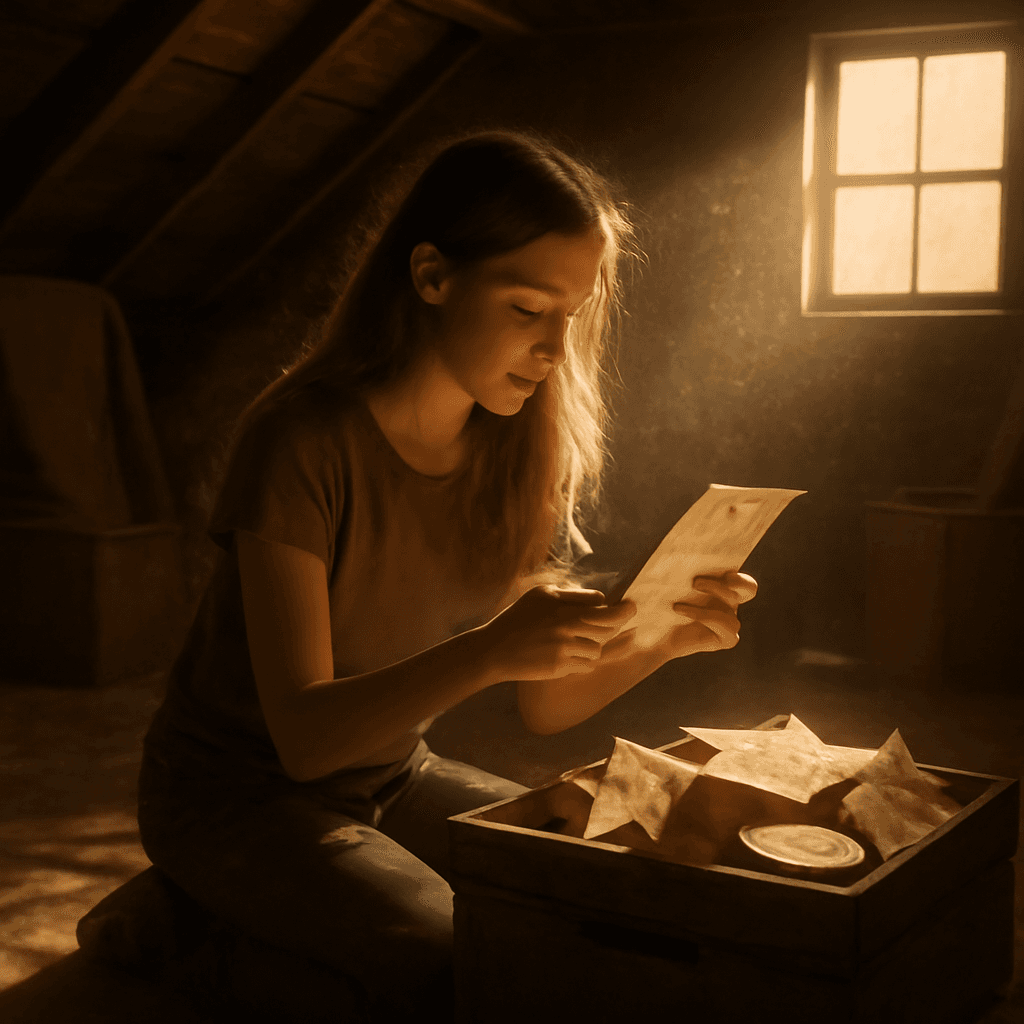
When Hana was cleaning the attic after her grandmother's death, she found a box full of letters. Hundreds of them, neatly arranged, each in its own envelope—but none of the envelopes were sealed. And none had an address. "Dad, did Grandma Maria write letters she never sent?" she asked Dundo, who was standing on the ladder. Dundo climbed into the attic, took a letter, and read it. His hands trembled. He took another. A third. Each letter was addressed to the same person—but it wasn't a name Hana had ever heard. "Who is Helena?" Hana asked. Dundo was silent for a long time. Then he sat on the dusty attic floor and said, "Sit down, Hana. Your grandmother Maria kept a secret for fifty years. And I think this box is her way of finally telling you."
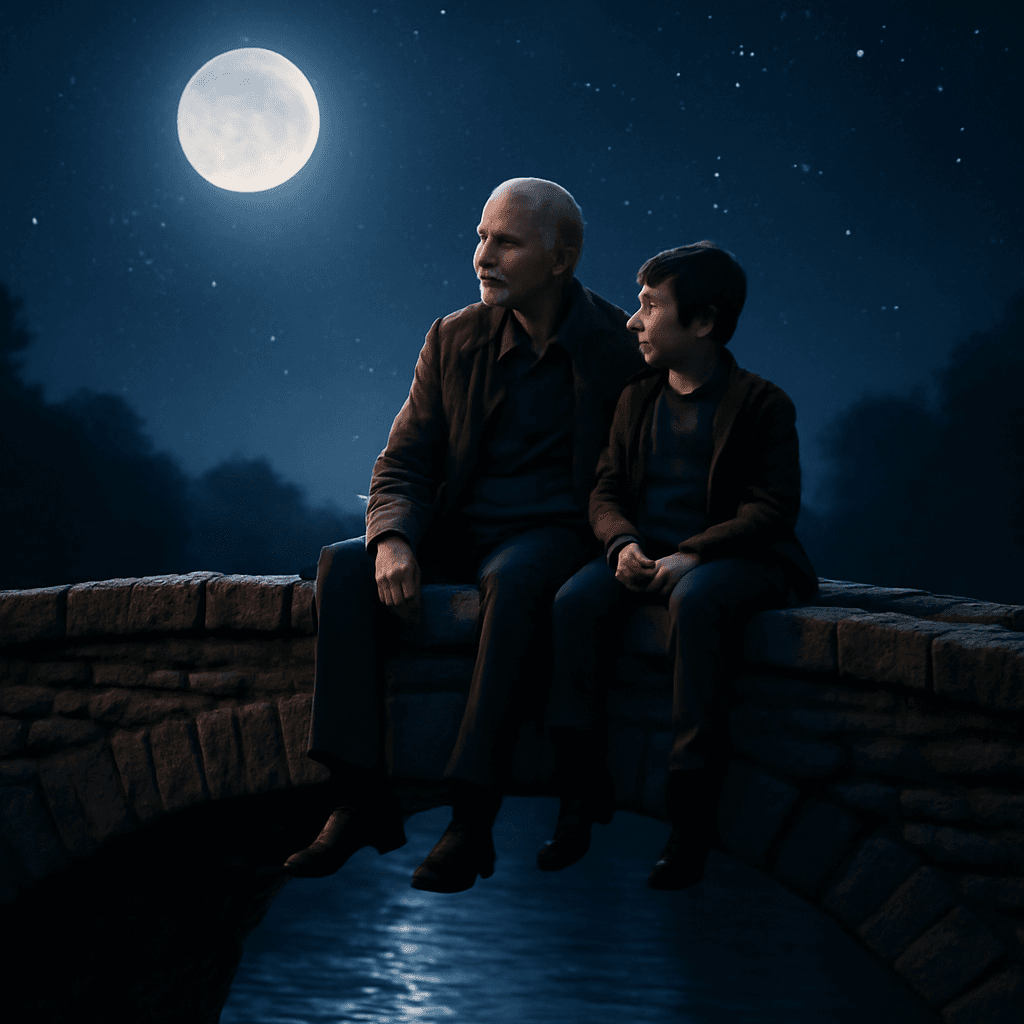
In a small town by the river lived an old grandfather, Otto, who spent his life building bridges. Stone, wooden, suspension — all kinds. People came from far away to see his bridges because none of them ever collapsed. But Otto had an unusual habit. Every bridge he built, after finishing it, he would spend the entire night on it. Alone, in silence, under the stars. His grandson Pino, who was eight years old, decided to follow him one evening. He hid behind a pillar and watched his grandfather sitting in the middle of the new bridge, legs dangling over the stone railing, whispering something to the river. "Grandpa, who are you talking to?" shouted Pino, unable to hold back any longer.